
Amazon AGM Results Highlight Calls for Board Accountability

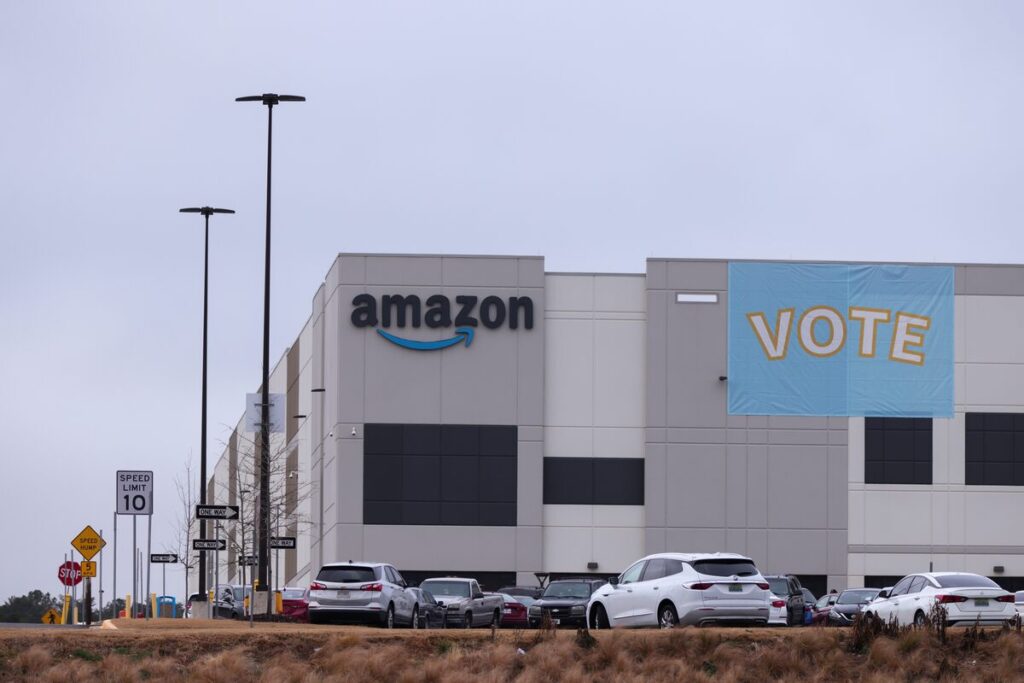
On May 20, 2026, Amazon shareholders cast their votes at the annual general meeting, and the results highlight a strong message: the Company must be held accountable for unilaterally excluding new shareholder proposals, following the SEC’s decision not to weigh in on the majority of “no-action” requests.
In April 2026, shareholder groups (SOC Investment Group, American Baptist Home Mission Societies (ABHMS), United for Respect Education Fund (UFREF), Investor Advocates for Social Justice (IASJ), and Oxfam America) launched a director “vote no” campaign, urging shareholders to vote against directors Rubinstein, Gorelick, Ng, and Stonesifer for being members and former members of Amazon’s Nominations and Corporate Governance Committee – tasked with overseeing corporate governance initiatives. The “vote no” letter called out Amazon for opportunistically excluding shareholder proposals and for not meaningfully engaging with shareholders.
In the midst of hostile attacks on shareholder rights and the corresponding chilling effect, the result is relatively strong.
Jonathan Rubinstein, Chair of the Nominating and Corporate Governance Committee, received only 88.64% support from shareholders when insider shares were excluded. The other members of the committee, Gorelick and Ng, received 91.8% and 93.65%, respectively, and former committee member Stonesifer received 92.53% independent support.
To put this into perspective, it is important to emphasize that director “vote no” initiatives don’t typically result in the selected directors receiving less than the required 50% majority vote. Even lowering the director support by a few percentage points can still be impactful, considering Board nominees usually win the vast majority of shareholder votes. For example, in 2025, the average support for Board nominees was between 95.4% and 96.6%. In its 2026 guide, PwC considers a vote result in the 60s or 70s to be a strong result. Given the increasingly challenging environment in which responsible investors operate, we believe that 11.36% opposition to Chair Rubinstein from independent shareholders sends a clear message to Amazon: investors are dissatisfied with the company’s taking advantage of new SEC rules and lack of meaningful engagement with shareholders.
Who supported?
Despite lack of support for the “vote no” campaign from large proxy advisors ISS and Glass Lewis, and other influential actors (CalPERS, CalSTRS, and Norges Bank), there were many who pre-disclosed their intention to vote against the four directors who were subject to the “vote no.” These included:
- New York State Common Retirement Fund
- Storebrand Asset Management
- Degroof Petercam Asset Management NV/SA (DPAM)
- Mirabaud Asset Management
- A coalition of 29 investors through a joint pre-disclosure
The director “vote no” results come at a time of intense attacks on shareholder rights and increased scrutiny of anything associated with ESG. The growing list of the SEC’s undermining of shareholder rights is concerning: making it easier to exclude proposals through the “micromanagement” exclusion; deciding to no longer weigh in on the majority of company “no-action” requests; removing the option for shareholders with less than $5 million in a company’s shares to file on the SEC’s EDGAR system; etc. In December 2025, President Trump issued Executive Order 14366, targeted at proxy advisors ISS and Glass Lewis, which described the firms as advancing “radical politically-motivated agendas. Recently, a group of four Attorneys General sued ISS for incorporating ESG factors into its recommendations. This came after the Florida Attorney General sued both ISS and Glass Lewis in November 2025 for “inject[ing] controversial environmental, social, and governance (ESG) demands into nearly every voting recommendation they delivered, pressuring companies to adopt race- and gender-based quota policies, ideological climate mandates, and other directives that expose businesses to legal and financial risk.”
The cumulative impact of the coordinated efforts to undermine shareholder rights has created a chilling effect, with support of ESG proposals continually declining, particularly by US-based institutional investors.
In Pope Leo XIV’s landmark AI encyclical, Magnifica Humanitas, released publicly on May 25, he addressed AI developers directly. “I wish to address a special appeal to those who develop artificial intelligence. In one sense, technological innovation can represent human participation in the divine act of creation. Developers, therefore, bear a particular ethical and spiritual responsibility, for every design choice reflects a vision of humanity. Just as the creator of an artistic or literary work must consider the values it conveys, so developers are called to embed values in their projects with due seriousness: with transparency, responsibility toward affected communities, and careful attention to ensuring that what is being cultivated is a genuine good.”
Pope Leo XIV’s warnings are central to our collective shareholder advocacy efforts, underscoring the urgency of investor engagement and the continued need for advocacy. Shareholders have ownership rights in the companies they have shares in and the right to transparency about how those companies operate. Investors must continue to collaborate and push back on the systematic attempt to dismantle what took decades to build.